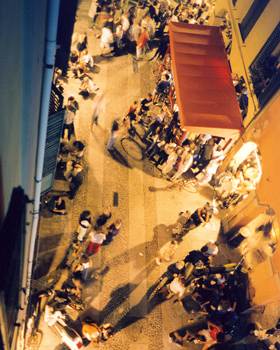
Here is the fluorescent scenario in which words as sensitive as nitroglycerine confront facts and actions. What will count more? Her last SMS or surprising her with a still-warm fresh pastry from the baker's?
You put your shoes on. You go and see. You meet. You straighten out any drift into the absurd with a laugh.
It is clear, in fact, that it is all too easy to create, with just a few lines, scenarios of sand which in ten minutes become detached from reality, pricking pride, susceptibility and misunderstandings. If one allows oneself to get carried away, it is incredibly easy to send unheard-of things.
You open your email and find an "I love you". No: "I hate you".
There are those who touch live wires to provoke the shock of a short circuit. To experience the effect it produces. After a memorable night, after perfect moments, one tests the reaction to a senseless "goodbye". One tries to move contradictory levers in an attempt to open unexpected doors, to bring the other person out into the open.

But these strings devoid of the physical dimension, or even just the rhythm and pauses of a telephone conversation, would attempt to feed unreal aspects of the relationship.
It is an exchange of atrophied prose, and sometimes a little cowardly, not authentic communication: physical involvement, warmth and contact are missing. Things we cannot do without, and fortunately so.
Everything is immersed in an environment with a high degree of awareness. It is a characteristic of contemporaneity: curiosity about the world finds continuous, accessible satisfaction.
We download the soil of Mars onto our desktop and perhaps we don't know how to make a Carbonara.
Awareness, self-analysis, lucidity: certain things awaken the taste for a complicated hunt.
Better, then, if the "prey" does not allow itself to be captured too easily, for goodness' sake: it would reveal itself as weak, banal! What escapes us is precisely what we crave.
Nothing new. «Are we or are we not what we lack?», said Carmelo Bene.
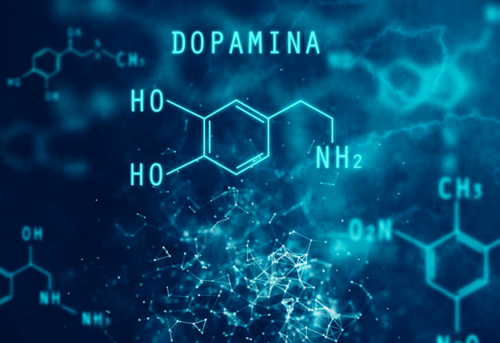
«Waiting for an SMS, a call or an email satisfies the hunger for novelty. The uncertainty of receiving a response creates emotion and this releases dopamine, the pleasure hormone, key in triggering modern addictions», maintains neurologist Rosario Sorrentino.
But there is also the "independence factor". Relationships are now crossed by the fear of seeing one's autonomy limited. We are sitting in front of the great keyboard of possibilities.
There is one thing we like: the feeling of being able to choose. We live in the present.
Also because the ability to plan has bounced back from a world that for the moment appears highly unstable and steered by sight. Every relationship we enter into corresponds to an aspect of our personality. One (or someone), but not everyone. And this authorizes us not to grant "exclusivity".
«But communication is also based on trust and foresight in identifying the secret nature of the other person and understanding what you want to share together», explains psychotherapist Françoise Sand in the book-interview "L'âge du labyrinthe", recently published in Italy by Feltrinelli.
Sand addresses the generation born between 1968 and 1978 (but exceptions are not rare): «You can take a thousand directions and therefore find it difficult to choose one. Yes, your generation seems to suffer from a dispersion of desire».
Generation labyrinth, in fact. Because its representatives can take more than ten years to find their own path and a more stable fulfilment. A large community of conscious people, at the height of their psychophysical potential. Yet instead of making use of it, they often allow themselves to be inhibited by the enormous freedom available to them. And they have fun, too. Waiting for the best opportunity.
Article published in November 2006
in the large-format urban culture magazine BMM.
in the large-format urban culture magazine BMM.