The character of Bologna's nights certainly depends
on humidity, on the exam schedule,
on the season and on our own inclinations.
But also on vague, mischievous currents that answer
only to themselves,
and that we are quite happy
to let carry us along.
There is little point in trying to categorize the night,
to assign it a label for every day of the week,
because
in Bologna it retains an unpredictability that can
catch you off guard.
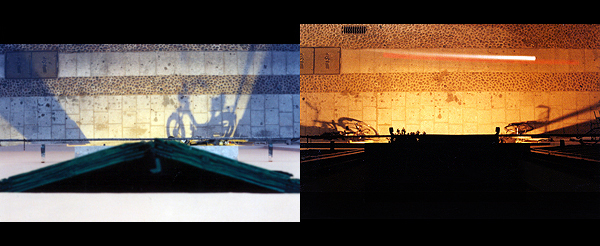
Bologna, Via del Pratello at night
You can sense the direction the night is taking right there and then,
as it begins to come alive, catch a glimpse of it from your room,
even with the windows closed: if you live in the city centre,
you can gauge the mood by the voices rising from the street;
if your room is a little farther from the centre, near the ring roads,
it will be the movement of the cars, their ebb and flow, that gives you
the pulse of the night.
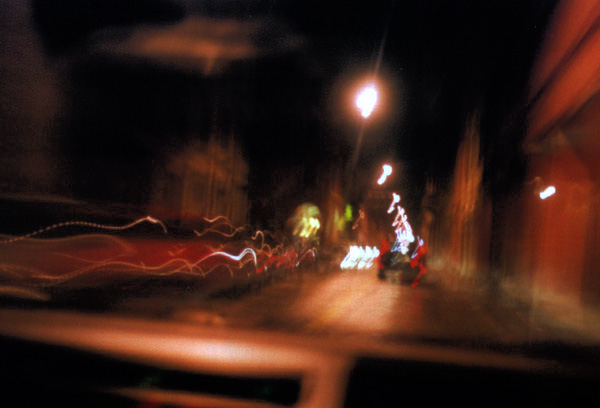
Bologna, between Via Zamboni and Piazza Verdi at night
If you are out in the suburbs, it may be your phone,
an invitation picked up at university that gets you going,
that makes you impatient to get out,
or perhaps a book or a packed schedule for the following day,
may persuade you to stay in.
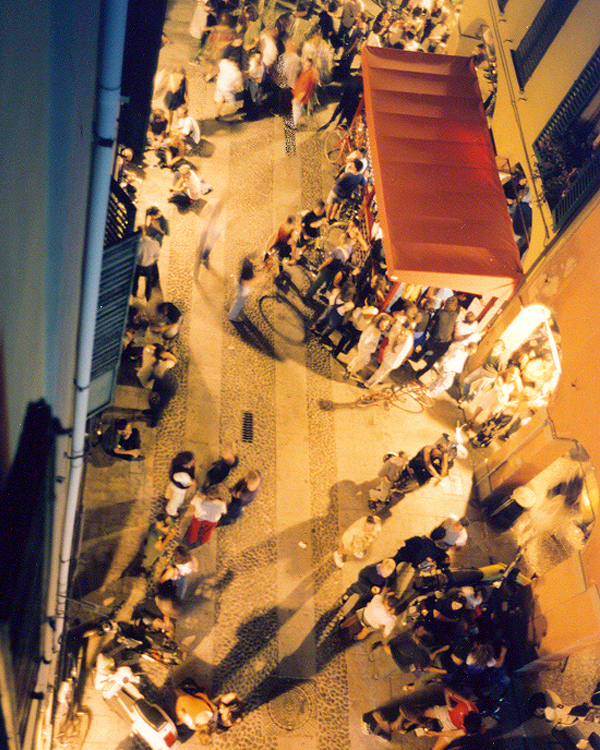 Bologna, aperitivo on Via del Pratello
Often the new night is already taking shape late in the morning,
after a peaceful or troubled awakening,
during the lunch-breakfast
at two in the afternoon, still carrying the physical, almost
gastric memory of the night just gone, which can influence,
even determine, the flavour of the night that has yet to be lived.
The idea then takes shape at university, in the study room,
in the absolute relaxation of the “smoke break”,
and
in the buzz of Via Zamboni and the familiar streets,
between a snack and a coffee, say between four and six in the afternoon,
when the mood and the laughter become shared, joyfully
spreading to everyone around us, and slowly build the shared
atmosphere, the excitement (especially when the sun is out),
or else settle us into uncertainty, into a kind of torpor.
The following hour, aperitivo time, becomes for some a bridge,
or rather a slide between afternoon and night, which in winter,
after all, almost merge into one another.
The cigarette supports the conversation, the knowing glance,
accompanies the absent-minded scratch behind an ear at the table;
sitting there, all you have to do is wait and - punctual or
acceptably late - the proposal almost always arrives,
the bright idea of how to spend the rest of the evening.
For others, that is instead the hour for a pause,
a little rest, a half-sleep on an empty stomach: they will go out later,
taking their time, in another skirt or another pair of shoes, with
their energy refreshed.
And then out on the streets, in the pubs, in people's homes,
improvising or finally making it to the event,
the party, the date that had been arranged, fixed, anticipated.
Everyone once again taking their chances with the night
and its countless variations and surprises.

But beware: the city, slyly, does not entirely reveal why certain
collective currents of warmth arise, which everyone can feel
building even on nights when - because of the day, because of the weather -
you would not have bet a cent on them, and which mysteriously fail to appear
on others, when on paper the fun had been guaranteed,
only for your carefully chosen night to turn out somewhat flat.
Perhaps this is also one of the reasons why,
on some evenings in Bologna, we find it so hard to stay at home,
disturbed by the suspicion that if we do not go out,
something important will pass us by forever.
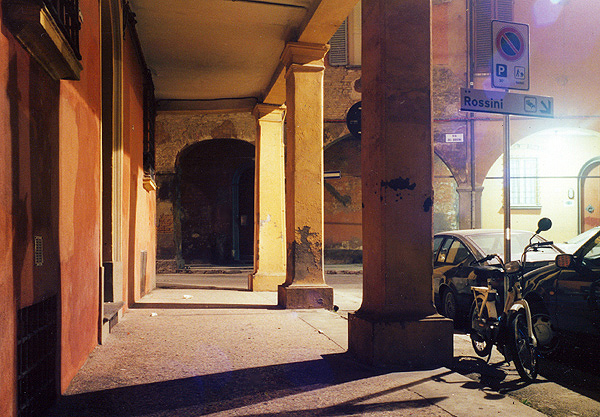
Archive note
Article originally published in 2001 in Il Bello di Bologna,
a supplement to the newspaper Il Domani di Bologna.
The photographs on this page were taken between the late 1990s
and the early 2000s on Fujifilm film.
English version
Translated from the original Italian article.
The most exhilarating side of Bologna
told in a novel
Even More Nights in Bologna...
University life in Bologna, its evenings,
its nocturnal adventures.
The Bologna nightlife scene, the sensuality of the city,
captured with a rare intensity.
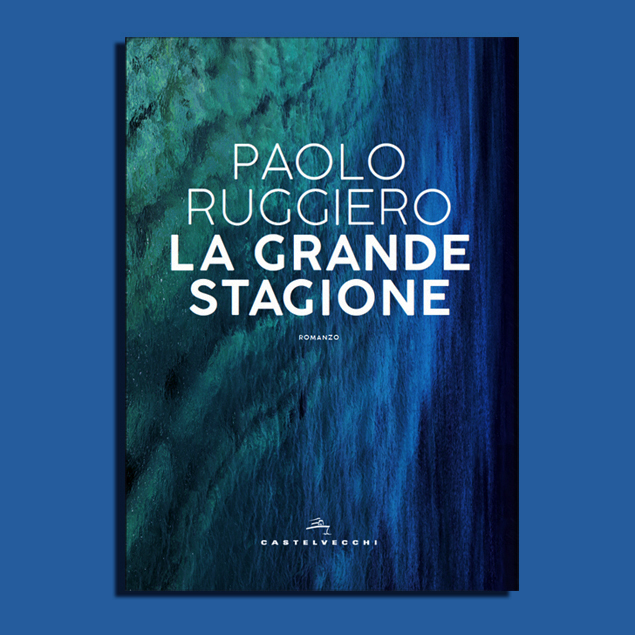
Rediscover this Bologna between the pages
of a remarkable debut novel:
You say Berlin, Amsterdam, Ljubljana, Auckland.
You say Liverpool.
You say Rome and Trastevere,
Milan and the Navigli,
Paris and the Quartier Latin.
You say Gothenburg...
... But talking about it among friends
for years, people who have travelled
a great deal, we became convinced
that the city where you can enjoy life
the most, if you are between 20 and 35,
is right beneath our feet:
it is Bologna.
Bologna is the European city
best suited to an epicurean,
libertine, sensual youth.
It brings back the real, vibrant city, captured live and at close range.
(Renato Barilli, art and literary critic, member of Gruppo 63)
The urban landscapes of Bologna are portrayed masterfully.
(Renzo Brollo, Il MangiaLibri)
Life takes over and everyone throws themselves into a wild rumba...
(Matteo Bugliaro, Piego di Libri)
An excerpt from the novel LA GRANDE STAGIONE
A party in the hills of Bologna
Last Saturday I had stopped by MediaWorld.
Any excuse will do to keep away from the Indipendenza-D'Azeglio-Farini triangle,
Bologna's main shopping streets, which are overrun at weekends.
People who rush around during the week to get into alienating offices,
beneath lights that fry in the neon glare.
People who rush around at weekends to get into or out of shops,
carrying things, clothes, that smell of petroleum and last for no time at all.
I avoid the arcades of Via Indipendenza whenever possible,
because they are not ancient but old; those soot-blackened columns
sit badly against the dazzling shop windows, against the hip-hop beats
spilling out of the boutiques and onto the street, growing ever more insistent:
a disturbing sensation I cannot endure for more than a few minutes.
At MediaWorld I was looking for an electric shaver for my sideburns.
Angela was working as a promoter for a phone case, a piece of rubber
worth a few cents, on offer for €29.90.
The absurd movement of her arm caught my attention; I could see her beyond the aisle.
She would throw the case onto the floor, then take out the smartphone, perfectly intact.
She was having trouble selling them.
“You try it too,” she had said. I threw it onto the floor but nothing happened.
It bounced back, untouched, without a scratch.
I realized it was a fake smartphone, with bulletproof glass or something of the sort.
She fills out a long navy-blue dress beautifully as I watch her come out of the doorway,
black ankle boots.
The slit at the side, revealing the band of her tights, is enough to leave me momentarily stunned
when she gets into the Opel.
We go to Vito's on Via Musolesi.
In the Seventies, Guccini, who lived nearby on Via Paolo Fabbri, used to come here;
Lucio Dalla and Claudio Lolli would camp out here too.
On the wall there is a photograph of Guccini holding an absurd folk guitar,
accompanying Dalla on clarinet.
I feel at ease with this girl from Reggio Calabria, cheerful,
outgoing,
with dark-brown hair, not dyed. She wears several bracelets and often adjusts them while she gestures.
She studies at Dams. She likes to sing.
I ask her about the case. She says she sold three by the end of the day.
“If you hadn't been there making me laugh a little,” she tells me.
But it is not a problem.
The agency will call her for other promotions. They pay well.
She likes the Lambrusco the waiter has thumped down on the table
in a chipped carafe, muttering something in Bolognese that we couldn't understand.
By the second glass she finds me handsome, she says.
I cut the meat slowly, along the grain.
I chew it just as slowly. Stay light, chew slowly.
When the waiter brings the digestif, Angela is holding my hand.
“That's great,” she says, “Imagine if you slapped someone with it.”
I feel her fingers sweating.
There is a party in the hills; she had already mentioned it on the phone.
The country house belongs to a literature professor she knows.
It is reached by taking a turn-off from the hillside road.
Someone has stuck an arrow to a pole to mark the way.
You have to go up a narrow road, its old asphalt almost white.
In the car park we can hear people laughing on the terrace.
The professor comes to open the door.
A convivial smile, three days' worth of stubble, a joint between his fingers.
We have brought a bottle of Lambrusco from Vito's.
We climb the spiral staircase that opens onto the terrace.
The view is breathtaking, the city looks like a nativity scene made of yellow
and orange lights, far away, floating in the darkness of the plain.
The air is clear, stirred by a light but chilly breeze, not yet springlike.
Angela comes back from the bathroom.
“Guess what I changed?” she asks.
She has put on thicker tights, almost leggings.
She was cold.
Pretty girls help themselves, opening the fridge and pulling corks from bottles of prosecco
with slightly uncoordinated gestures.
“A party is a success when there are more girls than boys.”
How many times have I heard Silvia say it at her legendary parties on Via Irnerio,
back when she still lived with her Sicilian flatmates.
Too bad about the ones she has now, less sociable, more restrained.
Or perhaps simply too young.
Too bad for her neighbours, who are becoming increasingly unbearable.
Pretty girls.
And Angela is no exception.
Jaco would have loved the scene too.
I text him to come over; he replies from some restaurant in the provinces.
“Radical-chic or gauche caviar?” he writes,
and I can see him doing his Nanni Moretti impression.
I send him a photograph of the library: lined with books, with a wheeled ladder
for the higher shelves.
Entire collections of Meridiani Mondadori, Coralli Einaudi.
Angela teases me with little kisses on my neck.
“I’m still cold,” she says.
“I should have brought a sweater.”
I suggest that we relax at my place for a while.
I have a Japanese futon, I tell her.
Some Amalfi limoncello, millesimé.
“Do you say that to all the girls?” she asks, with a challenging smile.
(Continued on page 77...)